
Fashion is an industry that thrives on the edge of creativity and controversy, consistently pushing the boundaries of what is acceptable in order to provoke thought, evoke emotion, and ultimately, sell products. In this exploration, we delve into some of the most contentious advertising campaigns from across the globe, ranked by the degree of public and institutional backlash they received. These ads, often polarizing and always memorable, serve as a testament to fashion’s power to challenge societal norms and ignite debate. Join us as we journey through the annals of advertising history, examining the campaigns that have stirred controversy, sparked discussions, and sometimes, even led to change.

1. Calvin Klein Jeans ‘Teen Basement Porn’
When it ran: 1995
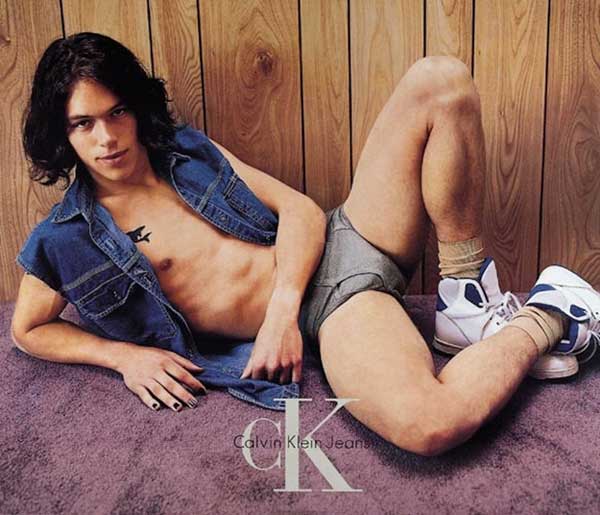
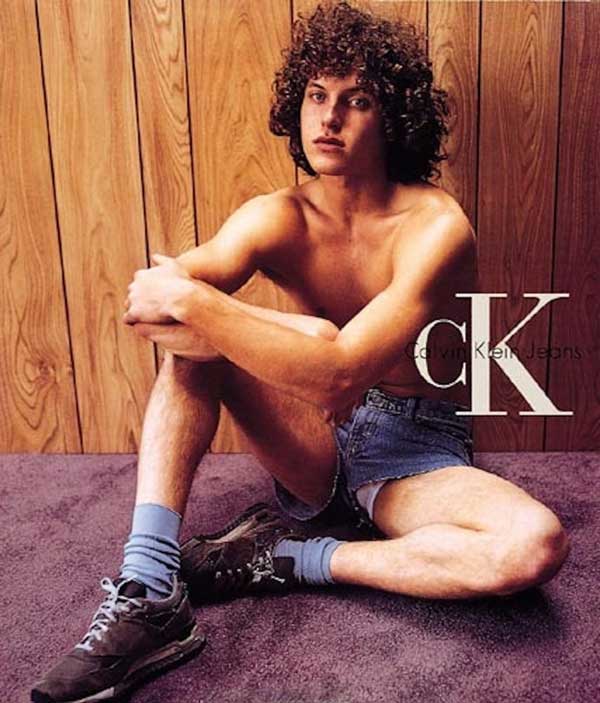
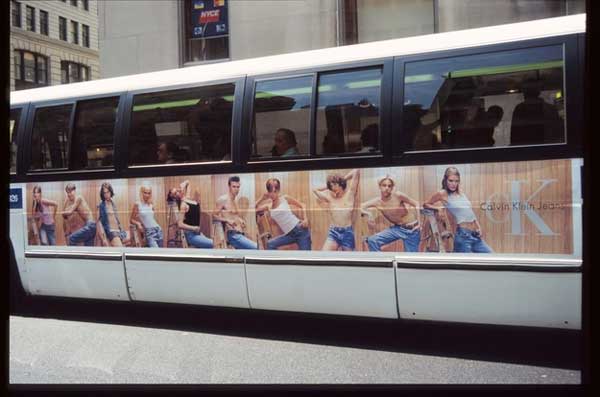
The Calvin Klein Jeans advertising campaign that caused significant controversy in 1995 was a series of advertisements that many critics claimed sexualized young models, some of whom appeared to be teenagers. The campaign featured black-and-white photographs and videos that mimicked the style of homemade videos in what looked like a basement setting. The models were posed in ways and asked questions by an off-camera voice, which many found to be suggestive and inappropriate, particularly given the youthful appearance of the models.
The controversy was so intense that it caught the attention of the public, media, and various organizations concerned with the protection of children. Critics argued that the campaign bordered on child pornography, which led to widespread public backlash.
The uproar reached such a level that the Justice Department announced it was investigating whether the campaign violated child pornography laws. This investigation prompted Calvin Klein to withdraw the advertisements. The company defended the campaign, stating that the ads were intended to convey the reality of young people’s lives and their independence, but acknowledged the public’s concerns by discontinuing the ads.
The 1995 controversy stands as one of the most notable instances in the fashion industry where advertising pushed societal boundaries to the point of legal scrutiny, reflecting the fine line between edgy marketing and social acceptability. Calvin Klein, as a brand, has been known for its provocative advertising strategies, but the 1995 jeans campaign is often cited as one of the most controversial in the company’s history.



2. Can Tom Ford Make You Buy This Cologne?
Year it ran: 2007
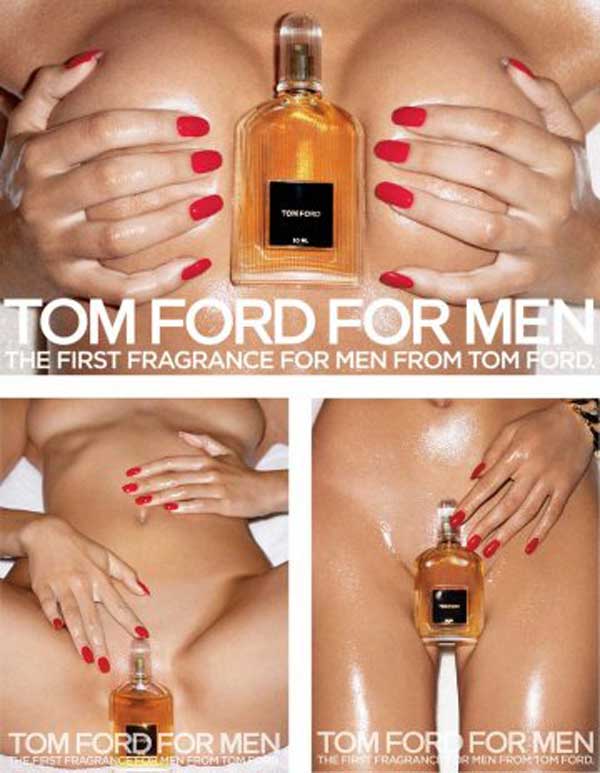
Tom Ford is indeed known for his bold and often provocative approach to fashion advertising, which has made a significant impact on the industry and stirred considerable debate. The specific campaign you’re referring to is for Tom Ford’s men’s fragrance, which featured highly provocative imagery that pushed the boundaries of advertising norms. The ads were notable for their explicit use of nudity and sexual innuendo, with one particularly famous advertisement showing a woman’s body with a bottle of Tom Ford’s fragrance placed between her breasts, while other variations of the campaign placed the bottle in other suggestive positions.
These advertisements were designed to grab attention and break away from traditional perfume and cologne marketing, which typically focused on the scent or the essence of the brand rather than overt sexuality. Ford’s approach was to create a direct, unapologetic connection between sexuality and his fragrance, suggesting that wearing it could enhance the wearer’s sex appeal or desirability.
The use of body oil and the strategic placement of the cologne bottle did indeed cause outrage among various consumer groups and advertising watchdogs, who criticized the campaign for objectifying women and promoting a narrow and exploitative view of sexuality. Critics argued that the ads reduced the models to mere objects for the purpose of selling a product, which they saw as unethical and in poor taste.
Despite the controversy, Tom Ford has defended his advertising approach as a form of art and expression, arguing that fashion should provoke and challenge societal norms. The campaigns under his direction, whether for his own brand or during his tenure at Gucci and Saint Laurent, have often been celebrated for their artistic quality and boldness, even as they sparked debate over the limits of advertising and the representation of sexuality and gender in the fashion industry.
3. American Apparel (Almost) Goes Porno
When it ran: 2008

American Apparel, under the leadership of CEO Dov Charney, was well-known for its advertising strategies that often bordered on the controversial and provocative. The brand’s aesthetic was characterized by a raw, unfiltered look that sometimes veered into what many perceived as voyeuristic or overly sexualized imagery. The advertisement featuring a photographer and his overeager muse, with the product being grey underwear, is a prime example of American Apparel’s approach to marketing its clothing line.
These advertisements frequently featured young models in suggestive poses, minimal clothing, and settings that resembled personal, intimate spaces rather than professional photoshoot environments. This particular style was a deliberate choice by American Apparel, aiming to differentiate the brand from its competitors through a more “authentic” and “real” presentation of its products and models. However, this approach also led to significant criticism.
Critics argued that such advertisements were not only overtly sexual but also problematic in terms of ethics and representation. Concerns were raised about the age of some of the models and the implications of using such young individuals in highly sexualized contexts. These ads were accused of blurring the lines between fashion advertising and exploitation, leading to debates about the sexualization of youth and the responsibilities of fashion brands in how they portray individuals in their marketing materials.
Despite the controversies, Dov Charney and American Apparel defended their advertising campaigns as expressions of freedom and the brand’s commitment to a certain aesthetic and set of values, including a form of authenticity and openness about sexuality and the human body. Nonetheless, the discussions around these advertisements highlighted the broader issues within the fashion industry regarding advertising ethics, consent, and the portrayal of individuals in media.
4. When Calvin Klein Got Aggressive
When it ran: 2010
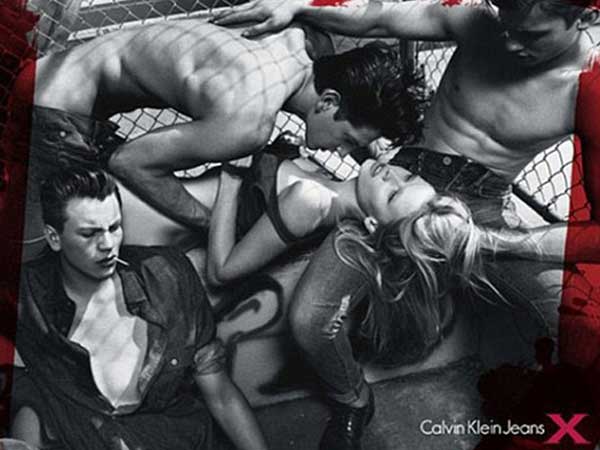
The Calvin Klein advertisement you’re referring to sparked controversy due to its provocative imagery and perceived messaging. Featuring supermodel Lara Stone, the ad was critiqued for showing her being manhandled by a group of men, which many interpreted as a depiction of sexual assault or an aggressive situation. This advertisement is part of Calvin Klein’s long history of utilizing bold and often controversial imagery in its marketing campaigns to garner attention and provoke discussion.
Calvin Klein has been known for its edgy and sometimes provocative advertising strategies since the 1980s. The brand’s approach often blurs the lines between art, fashion, and social commentary, which has led to both acclaim and criticism. The controversy surrounding the 2010 advertisement with Lara Stone underscores the ongoing debate about the responsibilities of fashion brands in their portrayal of women and the boundaries of advertising.
Critics of the advertisement argued that it perpetuated harmful stereotypes and normalized violence against women, contributing to a culture that dismisses the seriousness of sexual assault. On the other hand, some defenders might argue that fashion advertising, like any form of art, reflects and challenges societal norms and can provoke necessary conversations about these issues.
The backlash against this particular ad reflects broader concerns about the portrayal of women in media and the impact of advertising on societal attitudes towards gender and sexuality. It also highlights the fine line that brands like Calvin Klein navigate between pushing the envelope in terms of creative expression and crossing into territory that many find offensive or harmful.
6. Dolce & Gabbana’s Fantasy Rape
When it ran: 2007
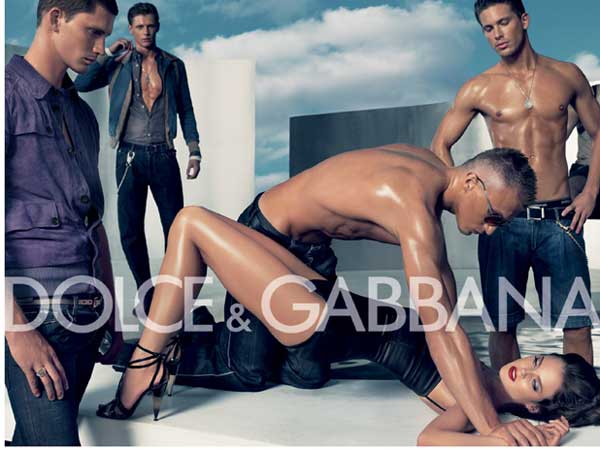
The term you mentioned, “fantasy rape,” refers to a highly controversial advertising campaign by Dolce & Gabbana that was widely criticized for its depiction of an aggressive and sexually charged scenario. This advertisement, which emerged in the mid-2000s, featured a woman being pinned down by a man while several other men looked on, suggesting a scenario of imminent sexual assault. The imagery sparked outrage for seemingly glamorizing violence against women and for its insensitive portrayal of a potential sexual assault situation.
The backlash was swift and global, with various groups and individuals condemning the ad for its portrayal of women as passive victims and for trivializing the serious issue of sexual violence. Critics argued that such imagery perpetuates harmful stereotypes and contributes to a culture that normalizes violence against women.
Dolce & Gabbana, a brand known for its provocative and boundary-pushing advertising, faced significant public relations fallout from this campaign. The controversy led to calls for the ad to be banned, and it was eventually pulled from circulation in several countries. The incident also sparked a broader discussion about the ethics of advertising, the responsibilities of fashion brands in their messaging, and the impact of media portrayals on societal attitudes towards gender and violence.
The “fantasy rape” ad by Dolce & Gabbana is often cited in discussions about the line between art and offensive content in advertising, highlighting the need for sensitivity and responsibility in how women and scenarios of violence are depicted in media.
7. Diesel Part I: How Is He Doing That?
When it ran: 2006
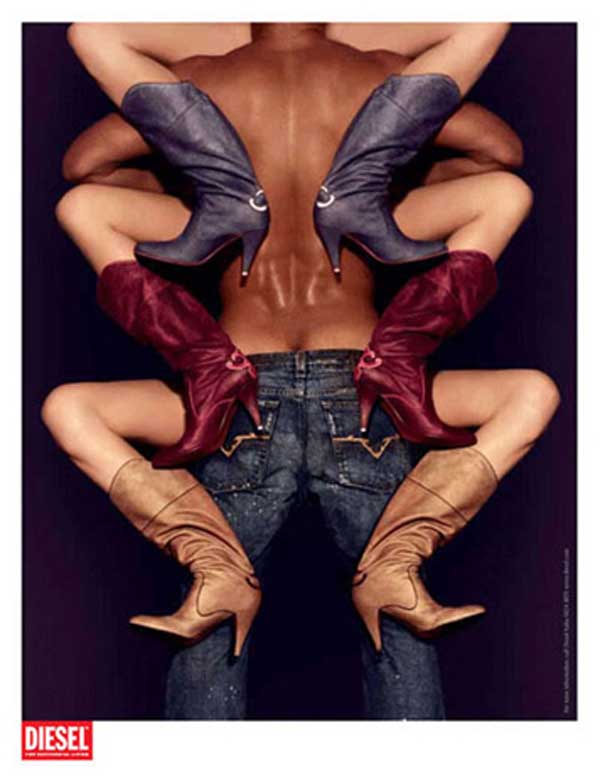
The Diesel ad campaign from 2006 you’re referring to became part of a series of fashion advertisements that have been banned or criticized due to their provocative content. Diesel, known for its bold and often edgy marketing strategies, pushed the envelope with a campaign that included imagery suggestive of group sex. This specific advertisement intended to challenge social norms and provoke discussion but ended up sparking controversy for its explicit sexual content.
The fashion industry has a long history of using sexually suggestive and controversial imagery to grab public attention and generate buzz. However, such strategies frequently lead to debates about the appropriateness of these advertisements and their impact on society. Critics of the Diesel 2006 campaign argued that it promoted an irresponsible and trivialized portrayal of sexuality, potentially influencing young and impressionable audiences in negative ways.
Advertisements like Diesel’s are often subject to scrutiny regarding their potential effects on societal attitudes towards sex and consent. While the brand might have aimed to be avant-garde or make a statement about sexual freedom, the backlash underscored the fine line between artistic expression and offensive content.
8. Diesel Part II: Cop A Feel
When it ran: 2006
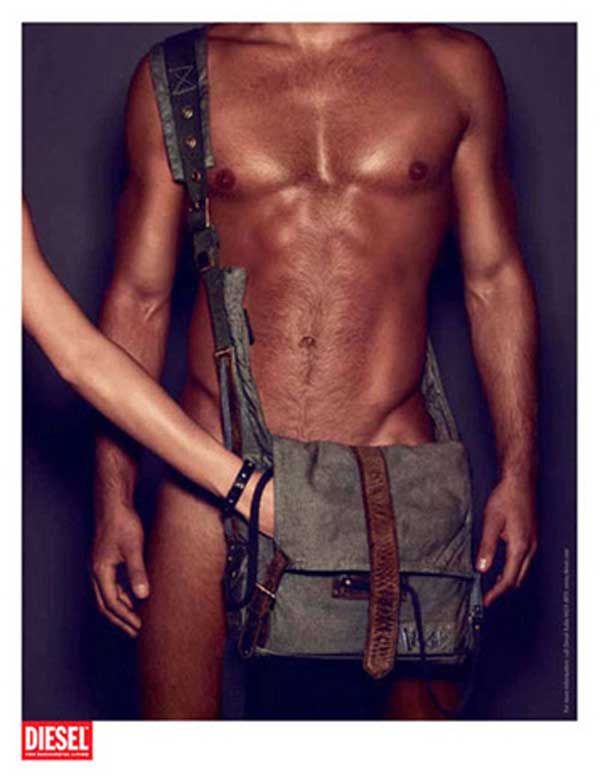
The Diesel advertising campaign you’re referencing, particularly with its highly sexualized imagery and the insinuation involving a woman’s hand, is a notable example of how fashion advertising sometimes veers into controversial territory by focusing more on provocative scenarios than on the clothing itself. This approach, while intended to capture attention and perhaps challenge societal norms or provoke thought, often sparks debate over the appropriateness and ethics of such marketing strategies.
In the realm of fashion advertising, the line between creativity and controversy is thin. Brands like Diesel have historically utilized shock value as a means to stand out in a crowded marketplace. This strategy can indeed draw more eyes to the brand, but it can also lead to criticism that the ads objectify individuals, promote inappropriate messages, or detract from the products themselves—the clothes.
Critics argue that such sexually charged ads do more than just sell clothing; they sell an image or lifestyle that may not align with healthy or respectful views of sexuality and relationships. The controversy around these ads often centers on their potential to reinforce harmful stereotypes or contribute to a societal climate that normalizes objectification.
9. The Lake and Stars Get Freudian (Kind Of)
When it ran: 2011
The Lake and Stars advertising campaign featuring a mother and her 19-year-old daughter in intimate apparel is another example of how fashion advertising can blur the lines between artistic expression and controversy. This particular campaign was designed to showcase the beauty and intimacy of the mother-daughter relationship, according to Maayan Zilberman, the company’s owner. However, the execution — showing them seductively embracing each other in lingerie — was perceived by many as crossing the line into inappropriate territory, with accusations of promoting incestuous and homoerotic undertones.
The controversy stems from the ad’s sexualization of a family relationship, which many found to be a troubling and misguided attempt to attract attention. Critics argued that such imagery exploits sensitive themes and could detract from the intended message of celebrating the bond between a mother and daughter. The inclusion of elements that some interpreted as phallic suggestions only added to the controversy, complicating the ad’s reception further.
Zilberman’s shock at the negative response highlights a disconnect that sometimes exists between a brand’s intentions and public perception. While the aim may have been to challenge conventional representations of beauty and familial relationships in advertising, the execution led to interpretations that diverged significantly from those goals.

10. Private Time With Emanuel Ungaro
When it ran: 2002
The Emanuel Ungaro advertisement you’re referring to, which showcases a model attending to her daily agenda, stands out for the controversy it sparked even before its official release. The fact that it was widely rejected by various publications worldwide, except for American Vogue, indicates the content or presentation of the ad pushed boundaries far enough to cause significant concern among media outlets. This preemptive backlash highlights the ad’s deviation from what was deemed acceptable or appropriate by the standards of many in the industry at the time.
Emanuel Ungaro’s decision to hire Lindsay Lohan as a creative director for one season in 2009 already marked a bold move, blending the worlds of celebrity and high fashion in a way that was met with mixed reactions. The brand’s advertising strategy, evidenced by the controversial ad, suggests a willingness to challenge norms and provoke discussion, a common theme among fashion advertisements that aim to stand out through controversy.
The specific reasons behind the refusal of various publications to run the Ungaro ad could range from concerns over the portrayal of the model and the activities depicted as part of her “daily agenda” to broader issues related to the brand’s image and messaging at the time. Without more details on the content of the ad, it’s difficult to pinpoint the exact cause of the backlash. However, it’s clear that the ad’s content crossed lines for many publishers, highlighting the delicate balance fashion brands must navigate between creativity and controversy.
American Vogue’s decision to publish the ad when others would not can be seen as an endorsement of Ungaro’s artistic vision, or at least a willingness to support more provocative or unconventional content. Vogue’s position as a leading fashion publication gives it significant influence over fashion norms and trends, potentially offering Ungaro a platform to challenge prevailing standards and spark conversation within the fashion community and beyond.

11. Gucci’s Exercise In Logo Marketing
When it ran: 2003
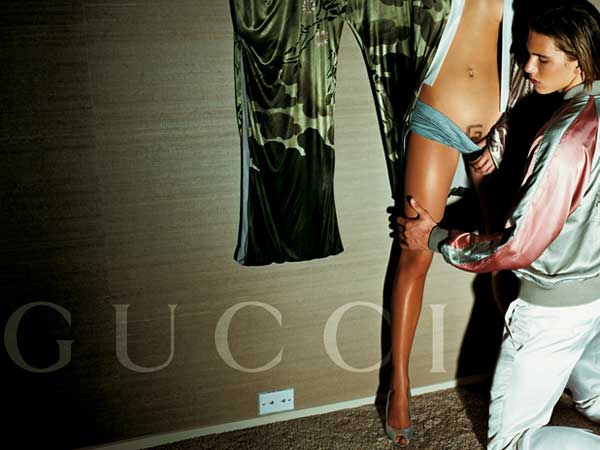
The Gucci advertisement known as “Pubic Enemy,” shot by acclaimed American photographer Mario Testino under the creative direction of Tom Ford, is another notable example of fashion advertising that sparked significant controversy. During his tenure at Gucci, Tom Ford was renowned for transforming the brand with his bold, provocative approach to fashion and marketing. This particular ad featured a model with the Gucci logo, the letter “G,” neatly shaved into her pubic hair, which was a daring move that pushed the boundaries of traditional advertising.
This advertisement was part of Ford’s broader strategy to revitalize Gucci’s image by infusing the brand with a sense of bold sexuality and modern edginess. The ad was groundbreaking in its explicitness and use of sexual imagery to sell luxury fashion, aligning with Ford’s vision for the brand but also drawing significant criticism for what many saw as objectification or over-sexualization.
The backlash against the “Pubic Enemy” ad centered on its explicit content and the use of a woman’s body to create a corporate logo in such a direct and intimate manner. Critics argued that the advertisement was degrading and reduced the model to a mere object for brand promotion. Despite the outcry and calls for its ban, the UK’s Advertising Standards Authority ultimately did not prohibit the ad, siding with Gucci’s rationale that it was a legitimate expression of the brand’s identity and aesthetic under Ford’s creative direction.
12. United Colors of Benetton Takes On The Pope, Sheikh Ahmed
When it ran: 2011

United Colors of Benetton has long been recognized for its provocative and socially conscious advertising campaigns, often using shock value to highlight global issues and promote messages of unity and peace. The campaign featuring a montage of images showing various world leaders kissing, including one of Pope Benedict XVI and the late North Korean leader Kim Jong Il, is a prime example of the brand’s bold approach to advertising and social commentary.
This particular campaign, part of Benetton’s broader “Unhate” initiative, was intended to promote tolerance and global harmony by depicting unlikely reconciliations between political and religious leaders who are typically seen as adversaries. The use of digitally altered images to show these figures in intimate embraces was meant to shock audiences into rethinking their preconceptions about conflict, opposition, and peace.
However, the inclusion of a religious figure such as Pope Benedict XVI in such a context was especially controversial and prompted immediate backlash from the Vatican and other religious and political groups. The Vatican’s outrage focused on the disrespect and misrepresentation implied by the manipulated image, leading to a swift and public demand for its removal.
In response to the controversy and out of respect for the offended parties, United Colors of Benetton withdrew the ads featuring the Pope and Kim Jong Il. This incident highlighted the delicate balance between creative expression and respect for religious and cultural sensitivities. While Benetton’s advertising often aims to challenge viewers and provoke discussion on important global issues, the controversy demonstrated the risks involved in using provocative imagery to convey a message of peace and tolerance.
13. Sisley Part I: Sisley Goes Skiing
When it ran: 2007
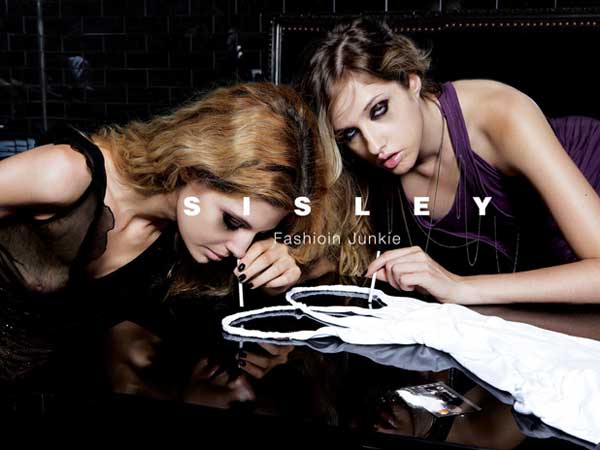
Sisley, as part of the Benetton Group, is known for pushing the boundaries of conventional advertising much like its sister company, United Colors of Benetton. The advertisement you’re referring to, which depicted a dress designed to resemble cocaine and featured models appearing as if they were under the influence of drugs, is a clear example of this approach. This particular ad was criticized for glamorizing drug use and for presenting a careless and irresponsible message regarding substance abuse.
The fashion industry often utilizes shock value and controversial imagery to capture attention and make bold statements. However, this specific Sisley campaign drew backlash for its perceived trivialization of serious issues like drug addiction and its consequences. Critics argued that such imagery not only undermines the severity of substance abuse problems but also could be seen as an attempt to capitalize on the shock value of drug culture for commercial gain.
The mention of “poor use of spell check” likely refers to textual elements within the ad that were either misspelled or improperly used, adding another layer of controversy by suggesting a lack of professionalism or care in the ad’s creation. This aspect further fueled criticisms of the campaign as being thoughtless and in poor taste.
14. Sisley Part II: Got Milk?
When it ran: 2001
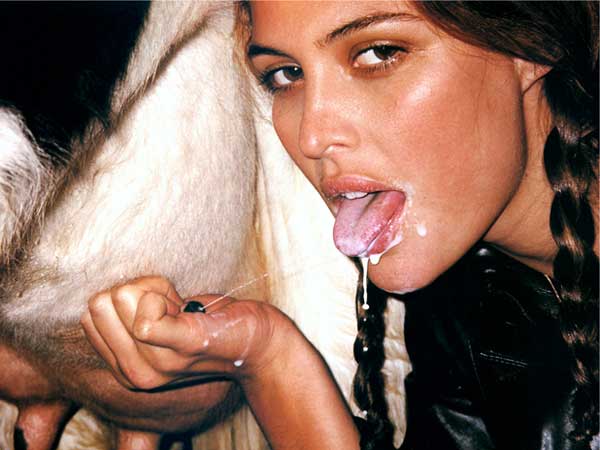
The Sisley advertisement featuring a young model drinking milk directly from a cow’s udder, photographed by Terry Richardson, is another instance where the brand used provocative imagery to draw attention. Terry Richardson, a photographer known for his explicit and controversial work, further compounds the ad’s edginess given his own contentious reputation within the fashion industry.
This particular campaign likely aimed to shock and provoke by juxtaposing a natural act—drinking milk—with an unconventional method, directly from the cow, in a manner that is visually striking and somewhat unsettling. The choice of Richardson as the photographer aligns with Sisley’s apparent strategy of leveraging controversial figures and themes to generate buzz and push the boundaries of traditional advertising.
The reaction to the ad, including feelings of discomfort or disgust, highlights the fine line between creative expression and the risk of alienating the audience. While some may interpret the ad as a bold statement on naturalism or purity, others see it as inappropriate or in poor taste, especially in the context of fashion advertising.
15. Yves Saint Laurent’s Lady in White
When it ran: 2000
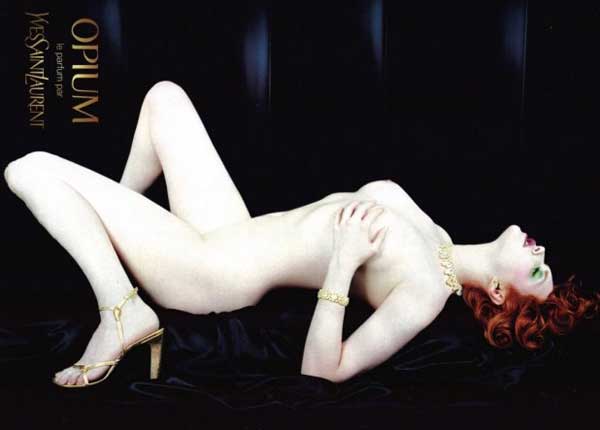
The Yves Saint Laurent fragrance Opium advertisement featuring model Sophie Dahl, conceptualized while Tom Ford was at the helm of the brand, is another iconic instance of fashion advertising pushing societal boundaries to the point of widespread controversy. In this advertisement, Dahl is depicted wearing nothing but white paint, jewelry, and stiletto heels, posed in a manner that was deemed highly sexually suggestive.
This campaign became notorious for sparking an unprecedented level of public backlash, as evidenced by its becoming the most complained about advertisement in the history of the UK’s Advertising Standards Authority (ASA) at the time, with a record 730 complaints. The controversy centered on the ad’s explicit sexual imagery and the public’s perception that it was inappropriate for widespread display in public spaces, where it could be seen by children and individuals who might find it offensive.
Tom Ford, known for his provocative and boundary-pushing designs and marketing strategies, likely viewed the uproar as a form of acknowledgment of his work’s impact. Ford’s approach to fashion advertising during his tenure at Gucci and Yves Saint Laurent was characterized by a willingness to challenge conventional norms and use sexuality as a powerful tool for engagement and brand identity reinforcement.
16. Agent Provocateur Does Abstract Horror
When it ran: 2011
Agent Provocateur, a luxury lingerie brand known for its bold and provocative advertising, took an innovative approach to promote its new collection in late 2011 by releasing a two-minute mini-movie inspired by the horror genre. This campaign stands out for its creative use of narrative and genre elements to market lingerie, diverging from more traditional, sexually charged advertising strategies commonly employed by lingerie brands.
By tapping into the horror genre, Agent Provocateur aimed to captivate viewers with a blend of suspense, intrigue, and the brand’s signature sensuality. This approach not only highlighted the lingerie within a compelling story but also engaged audiences in a way that transcends conventional advertising. The mini-movie likely featured elements typical of horror films—tension, fear, and a cinematic quality—that served to amplify the allure and mystique of the lingerie collection being promoted.
This marketing strategy demonstrates how luxury brands seek to innovate in their advertising by crafting content that offers more than just product images; they tell a story and evoke emotions, thereby creating a memorable brand experience. For Agent Provocateur, known for pushing boundaries and challenging norms, incorporating the horror genre into its campaign allowed the brand to stand out in the crowded luxury lingerie market. It provided a unique platform to showcase their designs in a manner that’s both artistic and aligned with the brand’s edgy, provocative identity.
The use of a mini-movie format for a lingerie campaign underscores the evolving landscape of fashion marketing, where brands increasingly adopt elements from film and storytelling to connect with consumers on a deeper level. By engaging audiences through genre-inspired narratives, brands like Agent Provocateur not only promote their products but also craft a distinctive brand image that resonates with consumers looking for luxury, excitement, and innovation in their fashion choices.